Police expand use of facial recognition apps
Published on 05 May 2026
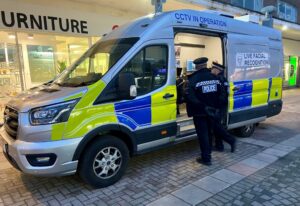
Forces embrace handheld technology to conduct instant identity checks
By Mark Wilding for Liberty Investigates and Matt Dathan for The Times


Published on 05 May 2026
Forces embrace handheld technology to conduct instant identity checks
By Mark Wilding for Liberty Investigates and Matt Dathan for The Times
Facial recognition apps that allow police officers to carry out on-the-spot identity checks with their phones are being quietly adopted by UK forces before a potential national rollout.
At least one force has also discussed using facial recognition technology with live-streamed body-worn video footage and using drone-mounted cameras to identify people at protests.
The developments mark a significant expansion of the police’s use of facial recognition which, has to date, largely relied on cameras in public spaces and searches using images taken from sources such as CCTV and social media.
Merseyside Police is one of several forces to give officers access to handheld facial recognition technology, known as operator-initiated facial recognition (OIFR).
OIFR allows officers to take photos of faces and search for matches on police databases. It is typically used when someone refuses to provide their identity or officers believe they have given a false name, although forces say it can also be used to check the identities of those who are unconscious or otherwise unable to provide details.
Operator-initiated facial recognition is one of three types available to police. Retrospective facial recognition is the oldest form and is used to search images from crime scenes against pictures taken of people on arrest. Polling has found it to be the most acceptable form of facial recognition among the public.
Live facial recognition uses live video footage of people passing cameras and comparing their faces to wanted lists. More than a dozen already use it routinely. In December the government announced an expansion of facial recognition technology with the aim for it to be used more by all 43 police forces in England and Wales. Sarah Jones, the policing minister, has likened its impact on crime to the breakthrough of DNA matching in the 1980s.
Documents seen by The Times and Liberty Investigates show Thames Valley and West Yorkshire police have also explored plans to adopt the technology. It will be made available to officers via Motorola’s Pronto policing app that the company says is used by more than half of UK police forces.
Other forces are experimenting with different approaches to OIFR. West Midlands police said it has started taking images captured by officers’ body-worn video cameras and using them for facial recognition searches “in real time”.
Records of a recent meeting of West Midlands police’s ethics committee include a discussion about “next steps” for the force’s use of facial recognition including “a mobile app” and “the use of drones” when maintaining public order. It noted: “Also, it could be integrated into the ability of Axon bodycams to livestream.”
When questioned about the level of evidence required to use OIFR at a protest, a West Midlands police officer told the committee this would be based on “policing purpose and a reasonable belief that the group will cause disruption”.
OIFR has already been adopted by South Wales and Gwent police, where officers have access to it as part of an app named iPatrol. The Metropolitan Police is also planning to test the technology.
The Home Office said it has no plans to roll out OIFR nationally. However, National Police Chiefs’ Council meeting papers show the department has held multiple discussions with forces about the possibility of doing so via its Strategic Facial Matching project — a national facial recognition database that is being developed.
A Home Office report published in February referred to “a new, national Home Office facial matching service” with “the ability to support operator-initiated facial recognition searches on a national level”.
A Home Office spokesperson said: “There are no Home Office plans to roll out operator‑initiated facial recognition nationally. Decisions on using handheld or officer‑initiated facial recognition remain a matter for individual police forces.”
Merseyside police said it used OIFR on 125 officers’ phones in one pilot area in November, adding that the technology is being used to identify people “where a legitimate policing purpose exists” and “only when other reasonable methods of identification have been exhausted”.
Force documents state: “OIFR is a valuable policing tool that helps MSP to keep the public safe and to meet its common law policing duties, which include the prevention and detection of crime, the preservation of order, and bringing offenders to justice.”
West Yorkshire police documents indicate the force is working with the Home Office to equip officers with OIFR, which is “anticipated for deployment in 2026”. When asked, the force said no date had been set.
Thames Valley police has not confirmed when it expects to use the technology.
Results from a government consultation on new laws governing police use of facial recognition technology, which closed in February, have not yet been published.
Daragh Murray of the Queen Mary School of Law, who previously conducted an independent review of the Metropolitan police’s use of live facial recognition technology, raised concerns that police forces were embracing handheld facial recognition devices before that exercise had been concluded.
“The significant human rights implications have not been addressed, including by parliament,” he said. “Proceeding with an advanced rollout of facial recognition during a government consultation raises questions about the purpose of the consultation.”
A version of this article was published with The Times.